|
Support for hiding/showing system icons in Plasma, support for using the native Windows start menu where appropriate, with more work in the "Previewer" applet and "TabBar". Better filtering support in the "FolderView" applet. Various work toward Amarok 2, including visual changes, work on playlists, and initial support for MTP devices. Work on a welcome screen in Parley. Initial commit of a "Sky Calendar" tool in KStars. A Twitter plugin in Marble. Trials with network games in KTank. Keyboard actions for switching tabs in Konsole. OpenSoundSystem (version 4) support in KMix. Quick extract and batch extract interfaces in Ark. "Automatic computer shutdown after downloading" functionality in KGet. Experimental mouse pressure and rotation for sumi-e painting in Krita. Text support for the WMF import filter in KOffice. KGo is added to playground/games. KDE 4.1.0 is tagged for release.
|
Andrew Walker introduces a less well-known KDE success story, Kst:
|
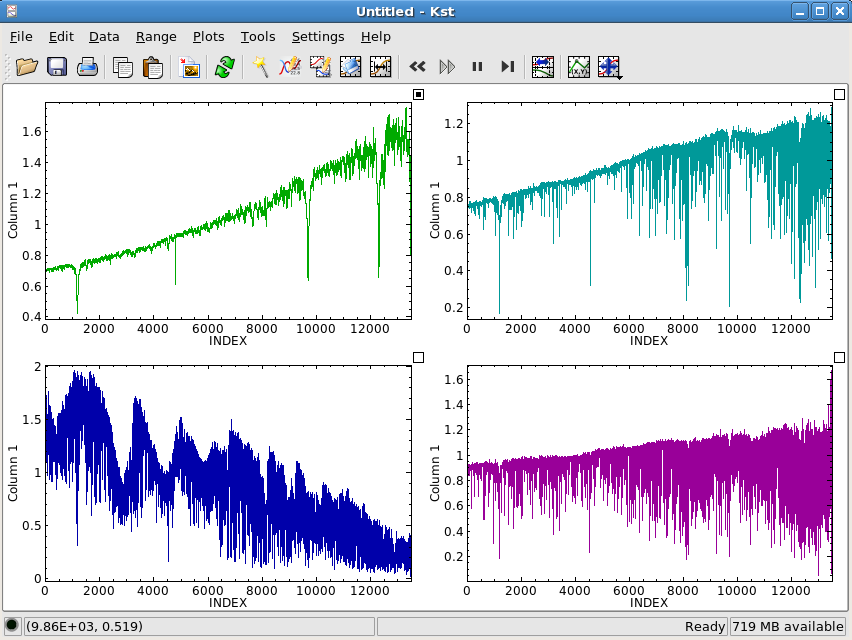
Kst is a plotting package, aimed at anyone with data to plot; particularly large amounts of "live" data. It was originally developed, starting in 2000, by Barth Netterfield at the University of Toronto, for use in the Boomerang and BLAST experiments; both balloon-borne scientific missions. Since 2003 its continued development within kde-extragear has been funded by the Canadian Space Agency (http://www.space.gc.ca/) as part of the Planck satellite mission. Beyond a wide demand from the scientific community there are also many other users, from individuals to large corporations, sometimes using Kst in ways that were never envisioned.
Kst truly excels at plotting large amounts of live data, of the sort commonly produced by scientific missions, automatically updating when new data is available. Kst is equally at home with static data. Numerous data formats are already supported and additional formats can be easily added via a plugin mechanism.
As one might expect, Kst handles zooming and scrolling through data with ease, together with the ability to mark areas of interest for further investigation. Event notification is also supported; allowing the user to define a set of anomalous conditions, which when triggered can be reported through email, ELOG, or the running of a script.
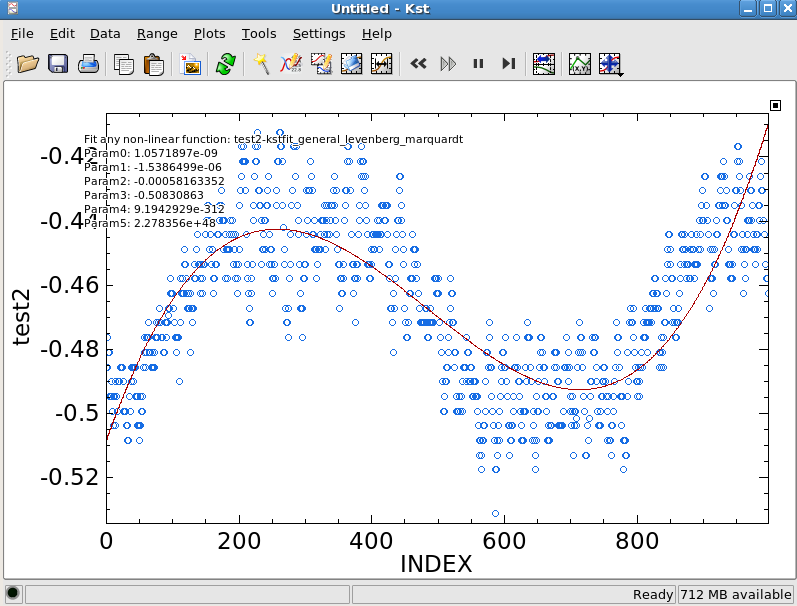
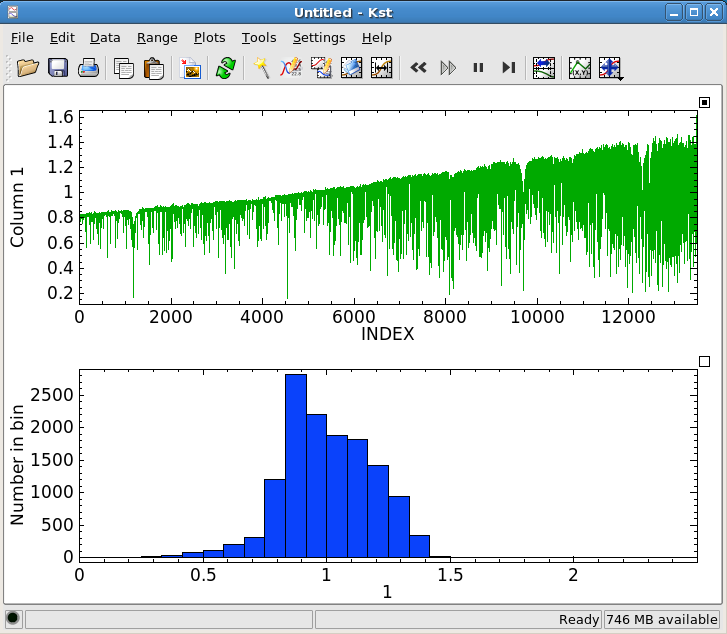
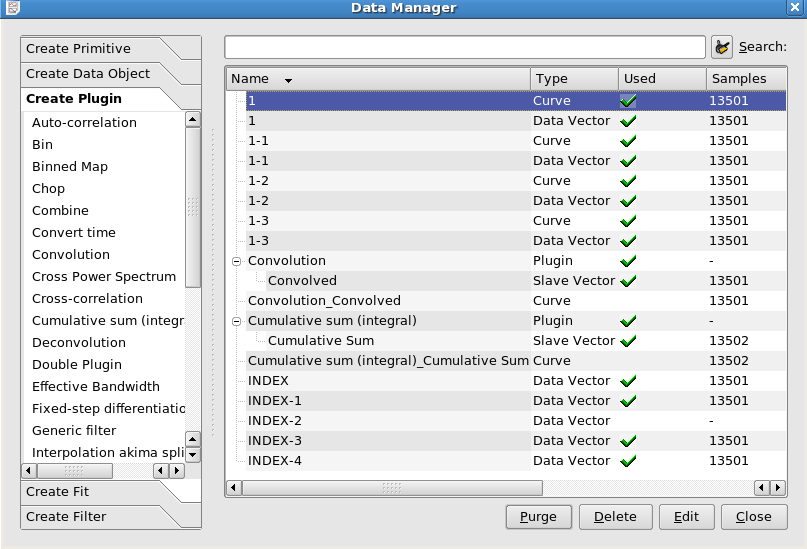
To allow for the rapid inspection and qualification of data, Kst can also quickly create user-defined equations, histograms, power spectra, and numerous other transformations. Data sets can also be fit with a wide range of functions, or filtered (high-pass, low-pass, band-pass, etc). The creation of new methods to manipulate data sets is easily achieved through a simple plugin mechanism.
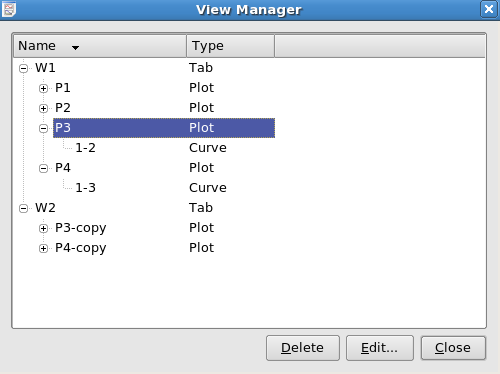
The interface to Kst is designed to be as intuitive as possible and complete documentation is available. Kst also supports a command-line interface and is fully scriptable, for those who want to automate Kst.
Kst 1.x is now relatively mature and further changes are driven primarily by the needs of the Planck team; though feature requests and/or bug reports are always welcome from anyone. Recent development has focused on extending and enhancing the scripting capabilities, so that complex scripts can be created to drive Kst. Development in the immediate future will be driven by the imminent launch of the Planck satellite.
At the same time work on the next generation of Kst (version 2.0, based on Qt4), primarily by Mike Fenton, continues and its release is expected soon. This will benefit from some of the architectural lessons learned from 1.x and also support running under Windows.
|
|
Joseph Burns discusses the ideas behind Plasmagik:
|
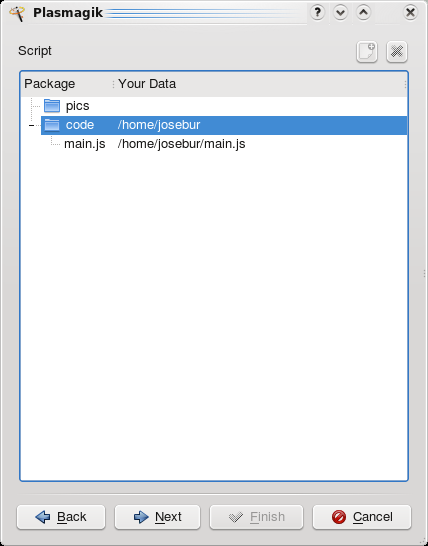
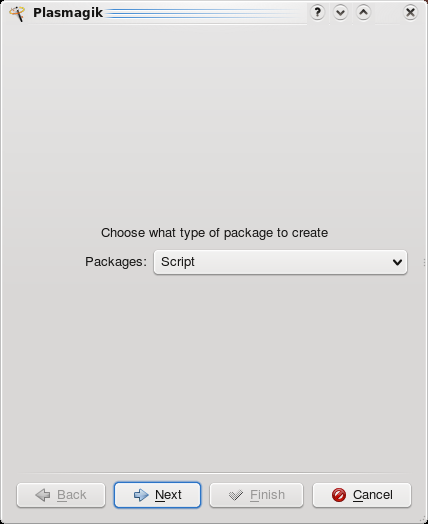
For my Summer of Code project, I have been working on Plasmagik. Plasmagik is two things: a packager and the Get Hot New Stuff (GHNS) uploader. Packages are very important because, among other things, they allow you to group all the files related to each other into a single package of data (ie. All the SVG's of a Plasma theme). Packages can be anything from Plasma applets, wallpapers, KDE Games themes, possibly your entire desktop configuration and any other kind of user modifiable content. What Plasmagik will allow you to do is choose which type of package you would like to create, package your files, and then choose to either save the package locally or upload them to GHNS for others to use.
For the first part of the summer, I created the PackageStructure Generator application which is basically just a UI front-end for Plasma::PackageStructure. The rest of the summer has been spent on creating a packaging UI that is flexible enough to adapt to any Package Structure. Keeping the UI simple for users has been an crucial goal for me as users will only use the packager occasionaly.
Originally, Plasmagik was meant for just Plasmoids. However, it made sense to enable any application that would like users to share content to be able to use Plasmagik. This introduced many different workflows and corner-cases that Plasmagik will need to take into account and deal with gracefully. This is the focus this week at Akademy.
Applications wanting to use Plasmagik will only have to provide PackageStructure configuration files. These can be easily generated using the generator application. This will allow applications to enable their users to create custom content and even share it. All this will be available with few view lines of code. This is one of the overall goals of Plasmagik.
Currently, many KDE applications have a "Get New..." button which allow users to download new wallpapers, themes, etc. With Plasmagik becoming the GHNS uploader, applications will now be able to have a kind of "Share New Stuff" button which will allow users to share their add-ons to everyone out in GHNS-land. However, Plasmagik will do more than just upload. It will also be also to locally create the package so users can email them to others. Imagine being able to package your Plasma containments and Plasmoids and emailing them to yourself to use at work.
I have very high hopes for Plasmagik and if you want to check it out it currently lives in /playground/base/plasmagik. Any comments/questons/suggestions/concerns are more than welcome =)
|
|
|